Mount Lawley Project: Creating a Purposeful Multipurpose Room

Designing a room that serves multiple roles means balancing practicality with intention. This Mount Lawley interior design project reimagines a once-underused guest room into a flexible, design-led space that supports daily life with purpose and calm. From workspace to guest retreat, every element was considered for how it would be used, lived in, and felt.
A Mount Lawley multipurpose room designed for modern living
Every home has a space that defies easy definition. It might start out as a study or guest room, only to slowly collect the overflow of daily life; spare bed and bedding, paperwork, craft projects, exercise gear. These rooms hold the potential to become the hardest-working areas of a home, but they can also be the most challenging to get right.
For this Mount Lawley home, the brief was to create a space that could do it all: a home office for two, a quiet library and reading room, a sewing and project zone, and occasionally, a guest room when family visit from overseas. The focus was on creating a sense of balance, designing a space that felt calm and considered while still flexible enough to adapt to daily life.
The Brief
This character-filled 1915 home had already undergone careful renovations, with a new kitchen, bathrooms, and laundry bringing modern comfort to its Federation charm. The high ceilings, jarrah floors, and original architectural details gave the home soul, but the spare room hadn’t caught up.
The clients needed the room to be practical and beautiful, functional for two people working from home, yet flexible enough to host family and creative projects. The room also had to harmonise with the rest of the home’s aesthetic: deep timber tones, and brushed brass accents layered over a calm, neutral foundation.
The space functioned as a guest room but struggled to support their daily life. A full bed dominated the footprint, leaving little room for flexibility or storage. It had become a room that looked useful on paper, but wasn’t supporting how they actually lived.
The aim was to rework the layout and storage so the room could evolve with them; practical for work, adaptable for guests, and visually connected to the rest of the home.
Understanding the Space
Before any design decisions were made, it was important to understand how the room actually functioned day to day. We talked about how the clients used the space, what worked, what didn’t, and what they wanted it to become.
The existing furniture layout didn’t support their routine; the desk positions competed with natural light, and the large bed limited flexibility. Some storage pieces had potential and were kept, while others were reimagined to better serve how they lived. The focus was on refining the balance, integrating what they already owned with new additions that elevated both function and feeling.
By clarifying these practical needs first, the design process became less about starting over and more about bringing cohesion to what was already there. The goal was a space that felt clear, adaptable, and quietly resolved. A room that finally worked the way they needed it to.
The Design Direction
The concept centred on creating a workspace that felt grounded, practical, and cohesive with the rest of the home’s Federation character. Rather than introducing a whole new style, the aim was to refine the existing palette and bring clarity to how the space functioned day-to-day.
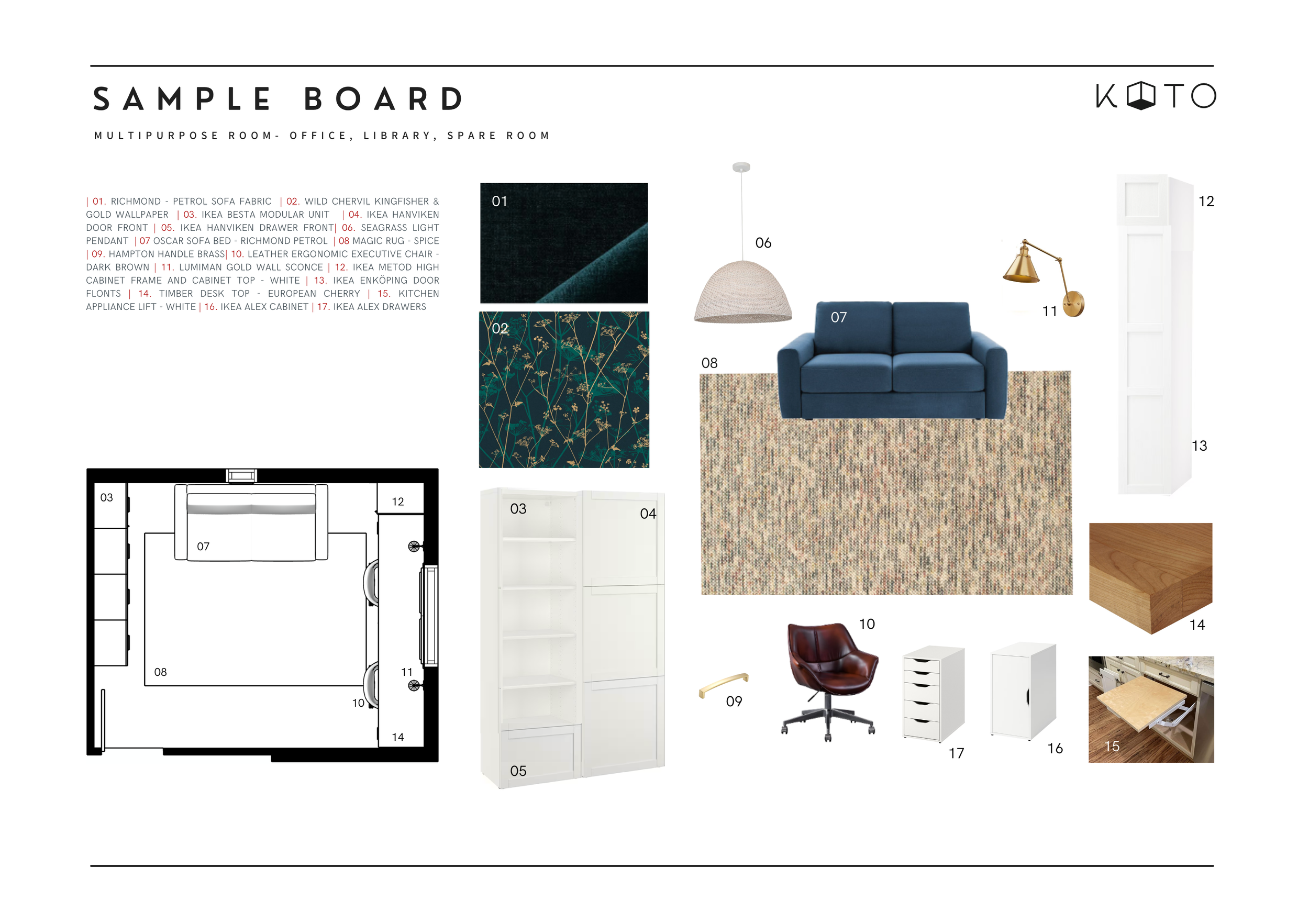
A soft, muted base tied everything together, linking the home’s moody greens and deep timber tones with lighter cabinetry that lifted the overall feel. The jarrah flooring became an anchor point, balanced by a the new textured rug that introduced subtle flecks of colour and softened the room’s geometry.
A new pendant light added gentle texture and warmth, bringing a more relaxed quality to the space than the previous modern chandelier. The sofa bed replaced the full-size bed, creating flexibility for guests without crowding the room. Storage was re-worked to feel both functional and integrated, combining existing elements with new joinery so that practical needs were met without visual clutter.
Every change was designed to make the space feel more resolved: calm but not sterile, personal but not busy. The result was a room that could shift easily between focus and rest, supporting the clients’ lives with quiet intention.
Colour and Material Story
The room’s existing materials already held much of its character. The original jarrah floors brought warmth and history, anchoring the space in its Federation roots. Rather than competing with those features, the new design aimed to balance them.
A deep petrol blue was introduced to frame the cabinetry and define the workspace, grounding the room while linking back to the palette used elsewhere in the home. Lighter tones in shelving and walls kept the space open and bright, while brass accents added quiet continuity.
The texture came through in more subtle ways, in the new rug that softened the timber floors, in the gentle weave of upholstery, and in the natural variation of materials. The palette wasn’t designed to stand out; it was designed to settle in.
The Result
What emerged was a multipurpose room that feels cohesive, calm, and quietly confident. It can host a workday, a creative afternoon, or a visiting family member without compromise.
The cabinetry now defines zones and reduces clutter, the pendant light brings warmth without drawing attention, and the palette ties everything together into a room that reflects both the home’s history and the clients’ daily life.
The transformation lives in how the room feels: more purposeful, balanced, and lived in. A space that supports daily life through design choices that feel natural and considered.
Reflection
A multi-purpose room is really an exercise in empathy. Understanding how a space needs to adapt across different moments of daily life. This project reaffirmed that good design doesn’t have to be loud to be effective; it simply needs to support how people actually live.
These kinds of spaces often hold the most potential. They sit at the meeting point of work and rest; spaces defined by balance, adaptability, and a clear sense of purpose. When planned with intention, they create focus when needed and invitation when it’s time to pause.