Slow Decorating for the Holidays: Calm, Intentional Interiors
The holidays have a way of sneaking up, often with a sense of urgency that leaves homes feeling more crowded than calm. Between the sparkle, the shopping, and the pressure to impress, it’s easy to lose sight of what makes this season meaningful. Slow decorating offers another path, one that values calm, connection, and design clarity over consumption and chaos.
Slow decorating isn’t about restraint for its own sake. It’s a way of creating festive spaces that feel meaningful and beautifully composed without falling into the cycle of constant buying. It encourages creativity through what already exists: layering texture, light, and natural materials in a way that feels personal and timeless. The aim is a holiday season that feels both festive and thoughtful, where design leads the atmosphere rather than excess.
What is Slow Decorating
Slow decorating begins with intention. Instead of rushing to fill every corner with the latest seasonal décor, it encourages us to pause and ask what feels essential, personal, and enduring.
It’s a design philosophy rooted in slow living: investing in pieces that last, choosing materials that age gracefully, and building beauty through pieces that carry meaning or quality. A slow-living approach to the holidays means using what you already have in new combinations, layering texture and light rather than excess, and curating details that reflect care.
This doesn’t mean avoiding new purchases altogether. It means buying consciously; supporting local makers, selecting sustainable materials, and choosing items that will return year after year with as much relevance as the day you found them.
Design-Led Festivity
There’s a misconception that a calm, design-forward interior leaves no room for festivity. In reality, it’s about composition and tone.
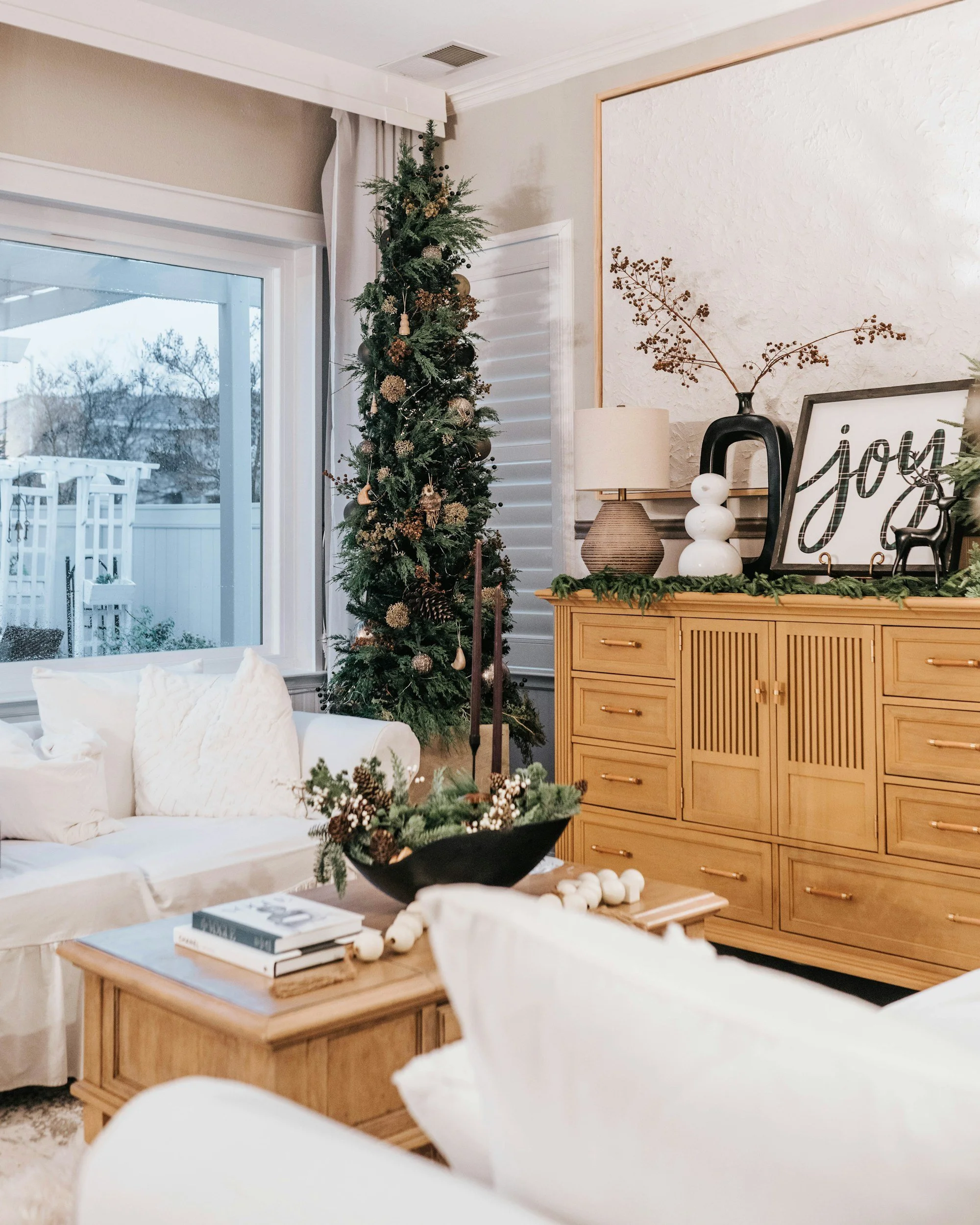
Start with what already defines your space; its palette, materials, and light. Seasonal décor doesn’t need to match perfectly, but it should harmonise with these foundations.When tones and textures speak to each other, even a few simple additions can feel intentional and elevated.
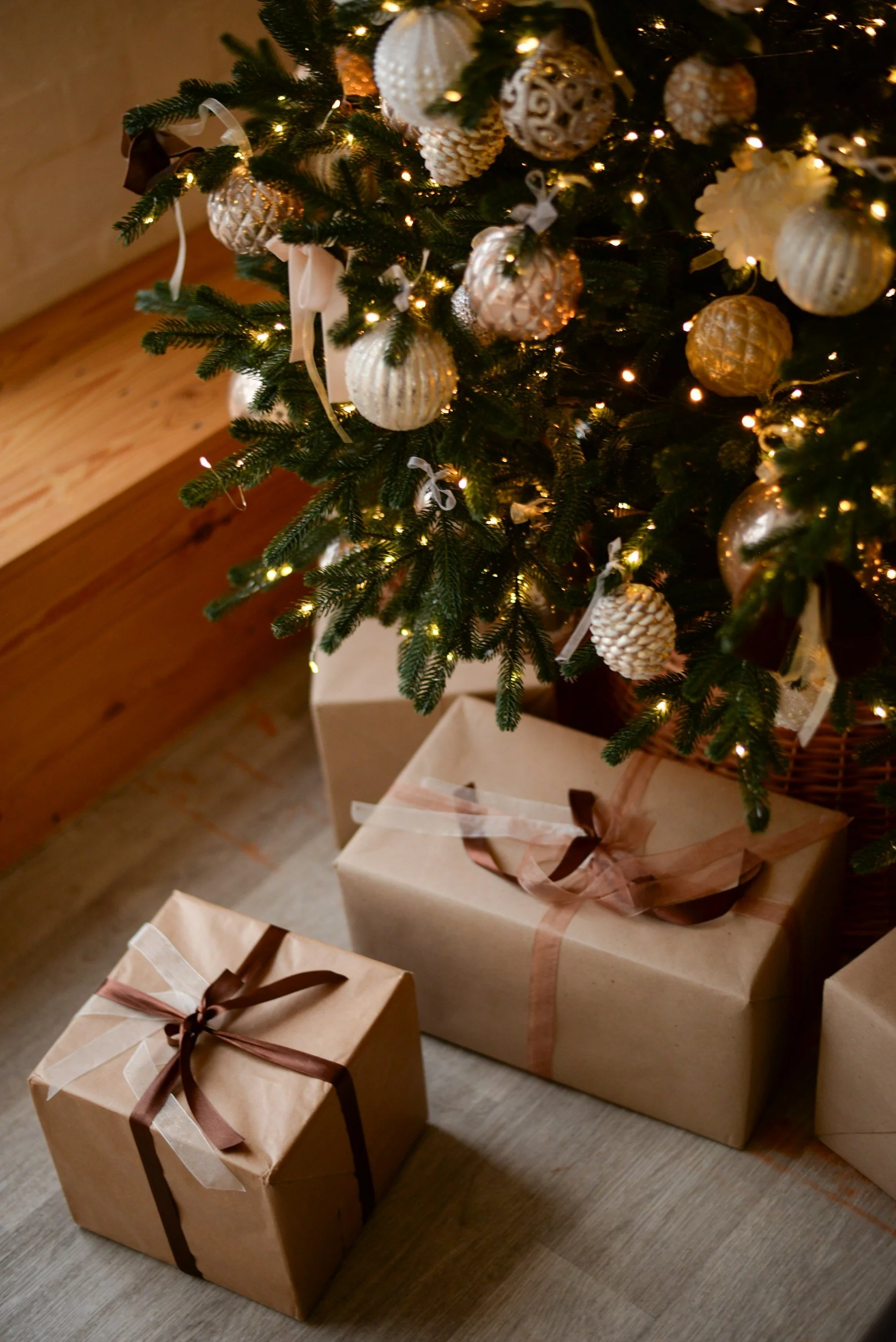
Small details make the biggest difference. A quality tree skirt or woven basket to conceal cords can instantly tidy the base of your tree. Metal ornament hooks replace flimsy strings, adding refinement without excess. Fresh greenery, candles, or flowers can layer in scent and texture, connecting the senses as much as the visuals.
These touches turn holiday decorating into a quiet design exercise, one that values longevity, re-use, and the small rituals that make a space feel complete.
Seasonal colour doesn’t need to follow a trend cycle to feel new. The most timeless spaces evolve gently, layering subtle shifts over a consistent foundation. One year you explore soft blush and gold, and the next, deep green and natural linen. The key is to build on a neutral framework so that the overall aesthetic remains cohesive even as the accents evolve. Styling becomes playful, but the integrity of the space remains.
Small seasonal accents; ribbons, table settings, or a new ornament shade, can bring freshness without replacing what you already love. This way, your décor remains dynamic but rooted, allowing you to play with mood and tone while maintaining visual harmony year after year.
A well-considered base gives you freedom to refresh details each year, shifting the palette or theme without starting from scratch, keeping the spirit of the season without the excess.
Beyond Trends: Quality Over Quantity
Every year brings a new wave of holiday trends. Minimalist trees, maximalist décor, Nordic simplicity, retro revival. The cycle moves fast, and the temptation to refresh everything can be strong. Slow decorating resists that pace.
Instead of chasing what’s new, focus on what feels timeless to you. Invest in pieces that bring texture and craftsmanship to your space. Hand-thrown ceramics, linen tablecloths, timber ornaments, or woven wreaths not only elevate your interior but carry stories that deepen over time.
This same mindset extends to giving. A thoughtful home often values objects that are both beautiful and functional, gifts that become part of daily life rather than seasonal clutter. Think small-batch candles, well-made textiles, handcrafted tools, or design books that inspire rather than clutter.
But not every meaningful gift comes wrapped in paper. Homemade preserves, a shared meal, a handmade hamper or fruit basket, or a thoughtfully planned day together can feel far richer than something mass-produced. Experiences, like a cooking class, gallery visit, or weekend picnic, create memories that last far longer than a trend item ever could.These kinds of gifts feel personal, lasting, and aligned with a slower approach to the season.
Slow decorating (and slow giving) both come back to the same idea: thoughtfulness over excess. When we choose gifts or objects with care, we’re shaping not just our surroundings but the kind of life that unfolds within them.
Choosing quality connects your aesthetic choices with your values, creating spaces that feel authentic rather than performative.
Creating Atmosphere Without Clutter
The easiest way to create a festive feeling is by layering sensory cues that build atmosphere.
Lighting is the foundation. Swap bright overheads for the glow of candles, fairy lights, or lamps that cast warm pools of light.
Scent works quietly too; a subtle pine, citrus, or clove note can signal the season instantly. Textures do the rest: a wool throw, a velvet cushion, a woven mat by the door.
Each of these adds depth and tone without crowding the visual field. When surfaces remain open and intentional, the eye has space to rest. In that space, atmosphere builds: a soft, whimsical interplay of light and scent that stirs memory, while texture brings warmth and even the smallest details begin to glow.
Sustainable and Natural Touches
Sustainability naturally aligns with slow decorating. Choosing materials that return to the earth, sourcing from local artisans, or reusing what you already own reduces both waste and visual noise.
Natural elements bring timeless texture. Branches, pinecones, native foliage, or flowers from your own garden connect interior and exterior, softening the line between built and natural environments. These materials also age gracefully, reminding us that impermanence is part of beauty.
Reusing doesn’t mean repetition. A garland from last year might look entirely new when styled differently, perhaps paired with fresh tones or new textures. Over time, these pieces become part of your seasonal tradition; reappearing each year with new context, familiar yet refreshed.
Designing for Connection
The holidays have a way of drawing people together, around a table, across the kitchen bench, or out into the garden. With more people comes more conversation, more life. Good design helps those moments unfold effortlessly, creating spaces that feel open, comfortable, and welcoming.
Here in Perth, Western Australia, the festive season arrives with warm air and long evenings. Homes open up, and gatherings flow easily between indoors and out. Connection comes from how those spaces are designed to move; dining tables that open to the garden, shaded seating that extends the living area, and lighting that keeps the mood cohesive from day to night. Small considerations like these shape how people gather and stay.
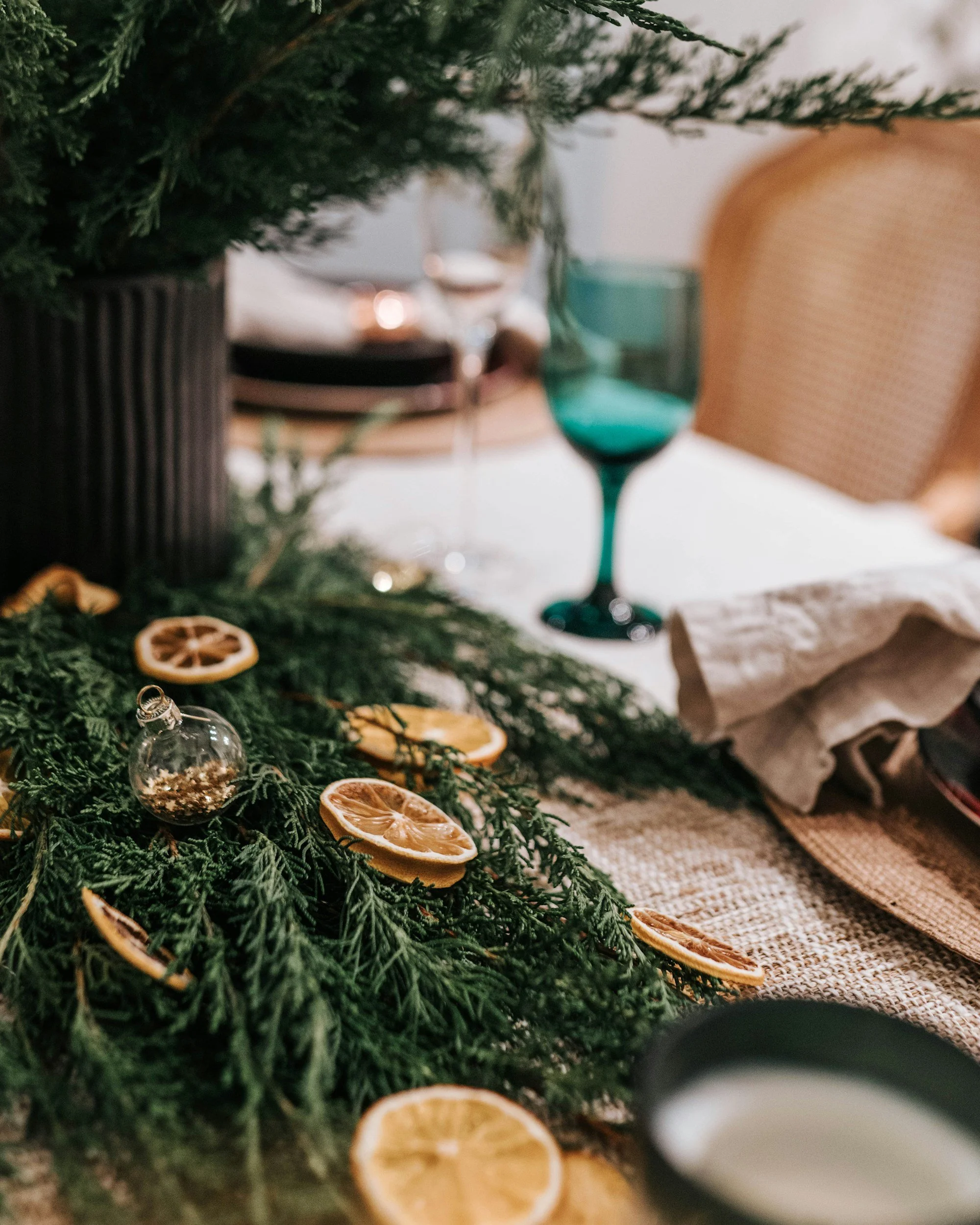
Styling helps anchor those moments. The table becomes a natural focal point: layered textiles, considered materials, and honest textures create a sense of occasion without excess. Subtle repetition, a tone echoed in glassware, a material carried through to serve ware, brings cohesion and flow. When the setting feels easy and unforced, people relax into it.
Connection lives in these gestures, in how the space holds conversation, laughter, and the quiet in between. Design simply gives it a place to land. When a space feels intentional, comfortable, and cared for, people naturally gather, talk, and stay a little longer.
If you’d like to explore this idea further, you can read my post on Designing for gathering: Spaces that bring people together
The Takeaway
Slow decorating invites us to design the holidays with the same clarity we bring to any well-considered space. Every choice; material, texture, layout, light, becomes part of how we live and connect. Done thoughtfully, festive design isn’t a layer we add for a few weeks each year; it’s an extension of how we create calm, functional, and beautiful homes all year round.